The Region
Discover Comporta, Portugal
A coastal village on Portugal's Alentejo coast: rice fields, pine forests and wide Atlantic beaches, with a village rhythm all its own.
Check availability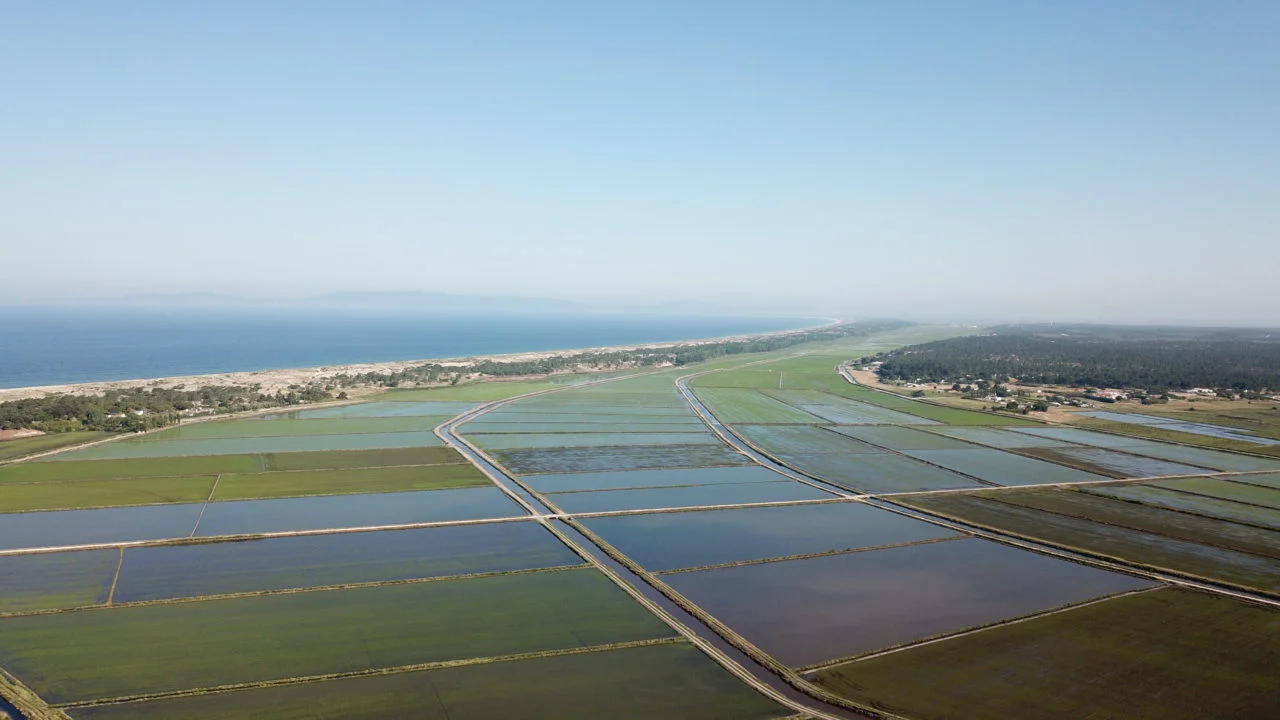
An Overview
What Is Comporta Like?
Comporta is a small village on Portugal's Alentejo coast, roughly 90 minutes' drive south of Lisbon, where rice fields, pine forests and wide Atlantic beaches meet a quiet village way of life. It sits within the Sado Estuary natural reserve, bordered by the river to the north and the open ocean to the west.
What sets Comporta apart is not any single attraction but the character of the place as a whole. The village remains small and low-key, a cluster of whitewashed houses, a chapel, a handful of restaurants and shops, and the rice fields that surround it on every side. The beaches are long, sandy and backed by dunes rather than promenades. The pace is slow, and days tend to find their own rhythm.
A holiday in Comporta suits people who want space, nature and good food without the formality of a resort. It appeals to couples, families and small groups who are happy to rent a house, cook some meals at home and explore the region at their own pace, by foot, on a bike, on horseback or by car.
This guide covers the village and its history, the landscape, the beaches, the food, the shops, outdoor activities, wine and golf nearby, and the places worth visiting within easy reach.
01
Comporta Village and Its History
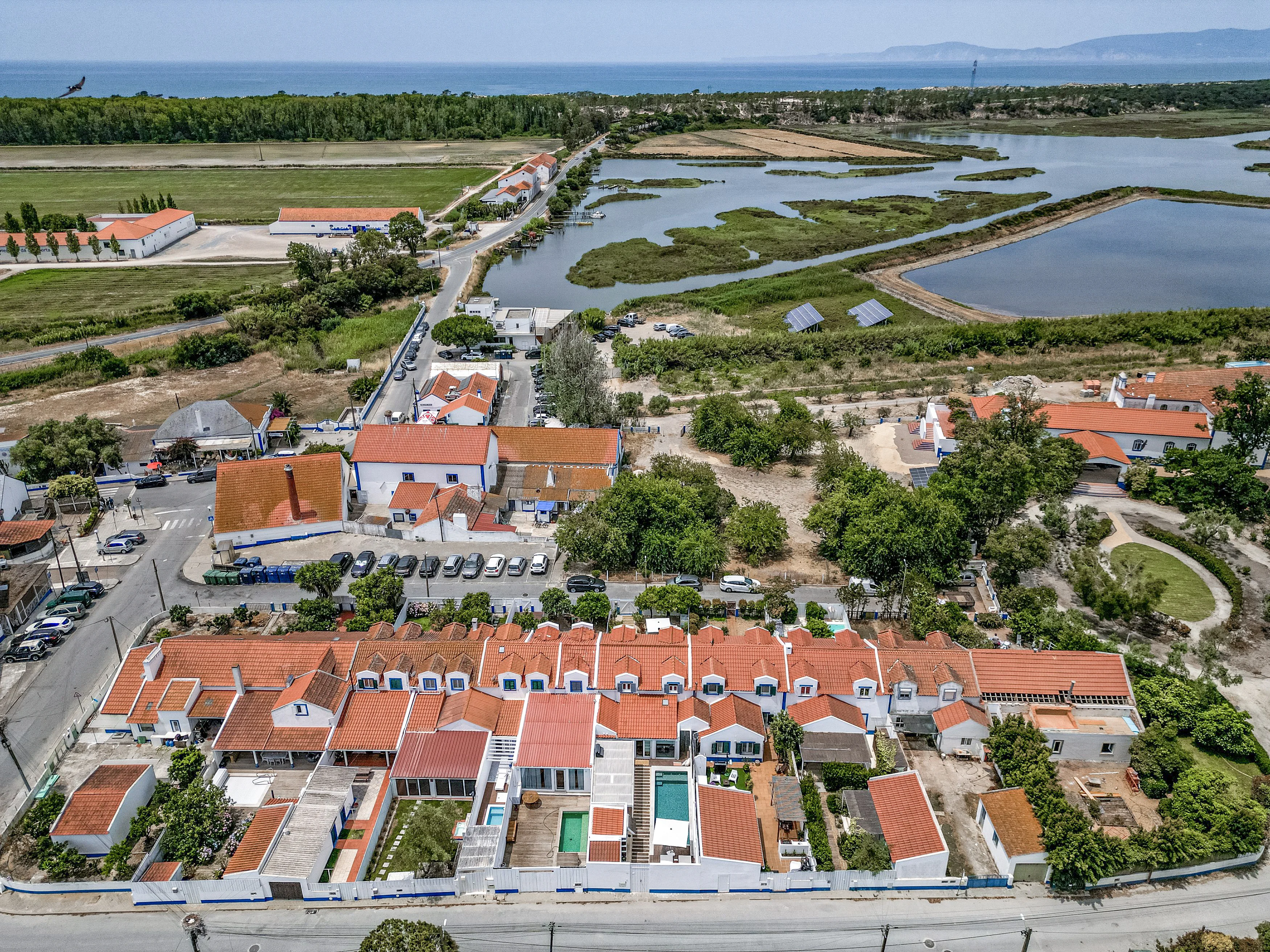
Comporta began as a working agricultural village at the heart of the Herdade da Comporta, one of Portugal's largest agricultural estates, covering more than 12,500 hectares. From the early 20th century, and especially from the 1920s onward, the estate was devoted primarily to rice production. The old rice husking factory, which dates from 1952, now houses the Rice Museum (Museu do Arroz), a short walk from the village centre and a good place to understand the industry that shaped the community.
The village itself grew to house the workers and managers of the estate. The original houses are single-storey, whitewashed buildings with blue or ochre trim, built in a style common to the Alentejo coast. Comporta Village House is one of these, built in 1968 and historically associated with the estate's managers. A chapel and a small square sit at the centre of village life.
For much of its history, Comporta was a quiet rural community of farmers, fishermen and rice workers rather than a tourist destination.
Today, Comporta has become one of Europe's most sought-after coastal destinations, sometimes described as the "Hamptons of Portugal." Its combination of beautiful beaches, protected landscapes, understated luxury and relaxed village life has attracted an increasingly international following. Yet, despite its growing reputation and sophisticated restaurants, boutiques and hotels, Comporta has retained much of its original character.
02
Comporta’s Landscape and Rice Fields
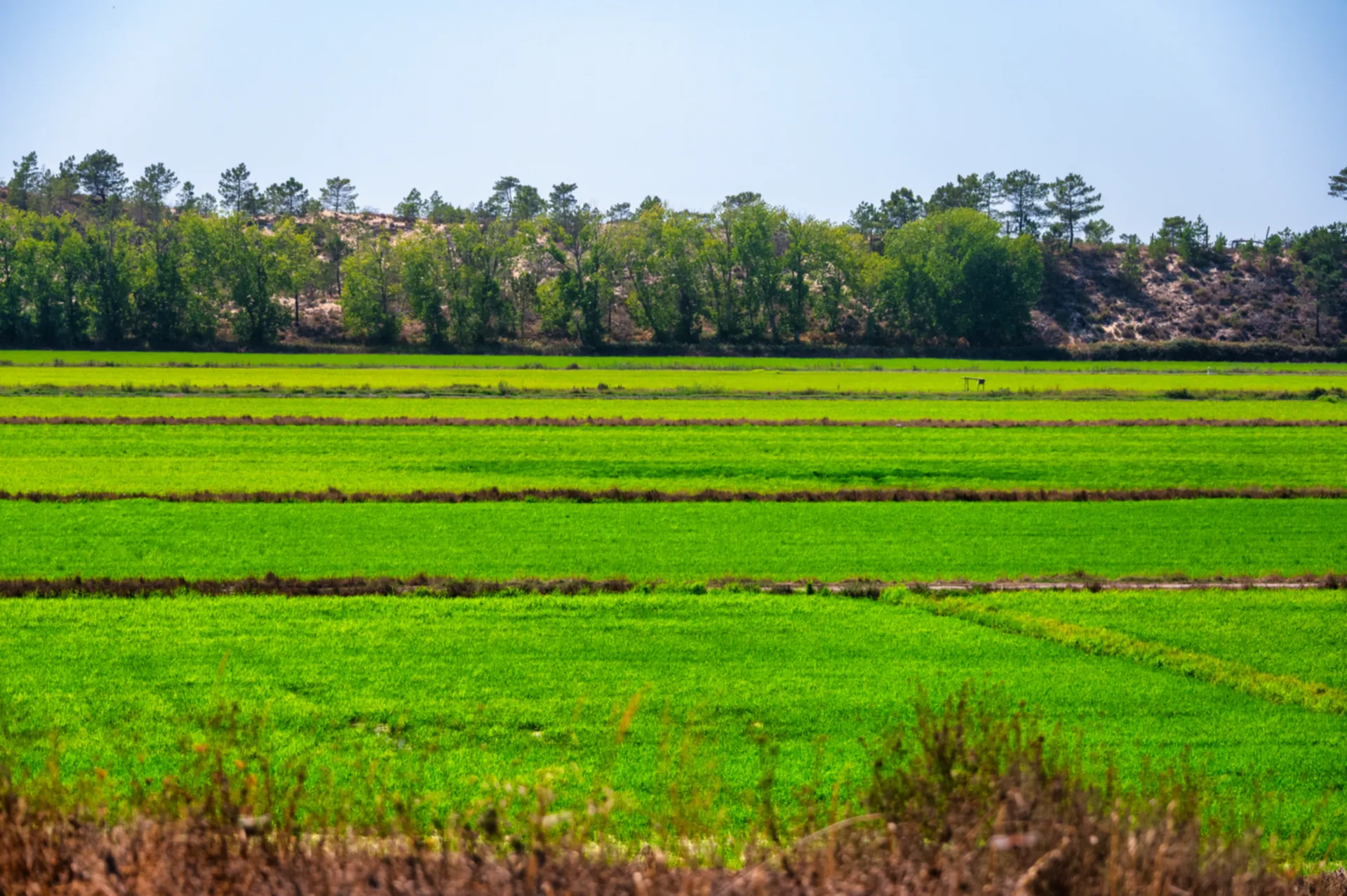
The landscape around Comporta is flat, green and waterlogged for much of the year. Rice fields spread out from the village in every direction, divided by narrow tracks and irrigation channels. In spring, the paddies are flooded and mirror the sky. In summer, they turn a vivid green. After the harvest, the fields are left stubbled and quiet, and migratory birds arrive.
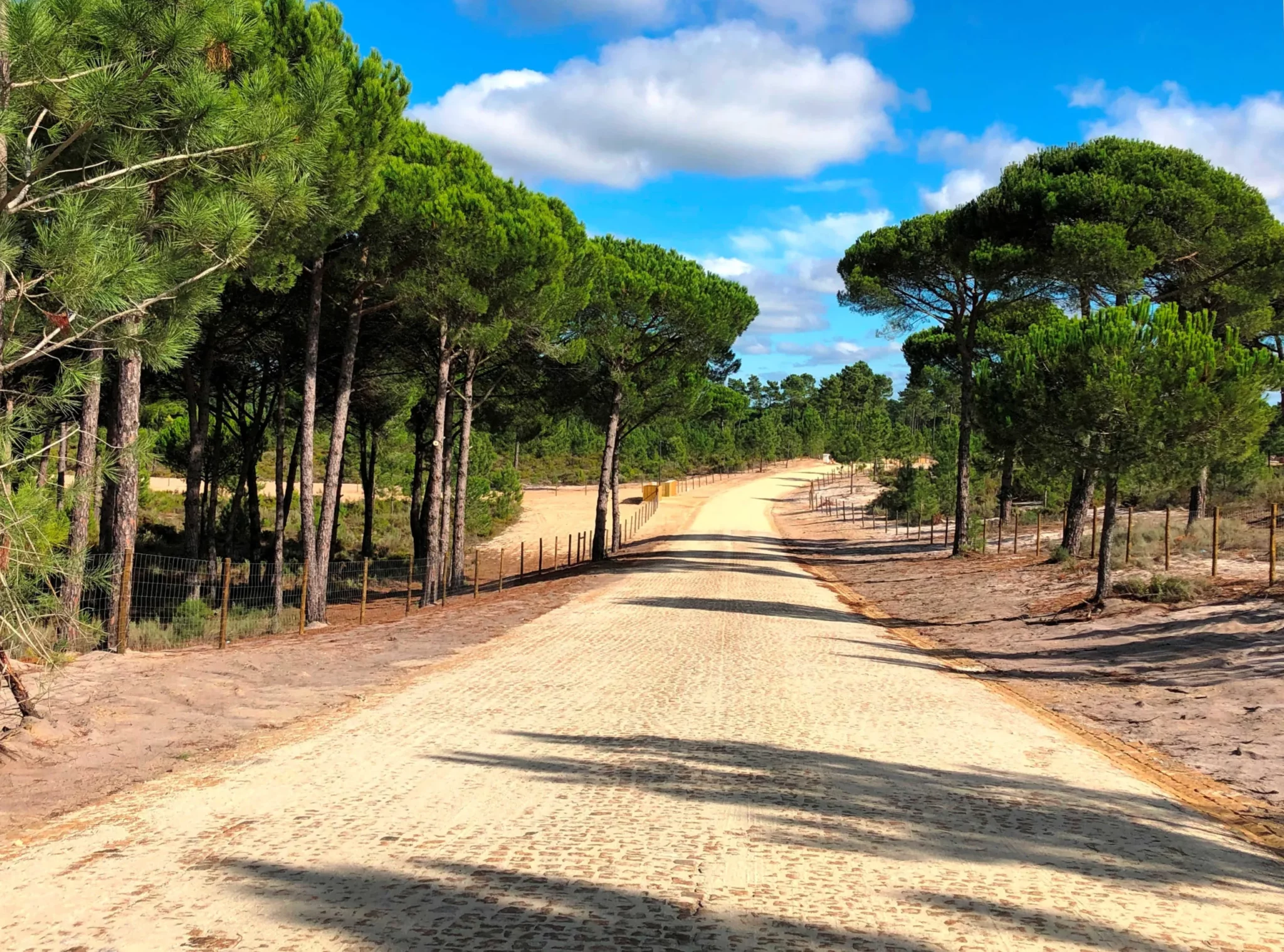
Pine forests frame the fields and line the approach roads, providing shelter from the Atlantic wind. Cork oaks grow in the drier areas, part of the Alentejo's characteristic montado landscape, where the bark is still harvested on a roughly nine-year cycle. Between the forest and the sea, low dunes rise above wide, sandy beaches.
To the north, the Sado estuary forms a natural boundary. The estuary is a protected reserve, a shallow, tidal expanse of salt marsh, mudflat and reed bed that supports a rich bird population and a resident colony of bottlenose dolphins.
The landscape is what gives Comporta its identity. It is not a conventional beach resort; it is an agricultural coastline, and the rice fields in particular define how the area looks and feels through the year.
03
Beaches Around Comporta
Comporta's beaches are long, wide and backed by sand dunes and pine forest rather than built-up seafronts. The Atlantic here is open and energetic, good for swimming in summer, though colder than the Algarve, and popular with surfers year-round.
Praia da Comporta is the closest beach to the village, less than five minutes from the house by car. It is a broad stretch of golden sand with a large car park and a beachfront restaurant. To the south, Praia do Carvalhal sits beside the village of the same name, with its own restaurants and a surf school. Further south again, Praia do Pego runs for several kilometres, backed by dunes and a handful of beach clubs.
The coastline from Tróia to Sines is largely uninterrupted, roughly 45 km of sand. Most beaches have lifeguards during the summer months and sunbed and umbrella hire. Outside the main season, the beaches are quieter and many facilities close.
This is just an overview. For detailed information on access, parking, facilities and what to expect at each beach, see our complete guide to Comporta Beach.
04
Food and Drink in Comporta
Food in Comporta is shaped by the land and water around it. Rice is the foundation, grown in the fields beside the village and central to the region's best-known dish, arroz de marisco, a seafood rice cooked with prawns, clams and whatever the boats have brought in. Grilled fish is on most menus, along with caldeirada, a traditional fish stew, and simpler petiscos, small plates of octopus, clams or cured meats meant for sharing.
The wider Alentejo tradition runs through the food. Pork, game and Alentejo bread appear alongside the seafood, and many restaurants source vegetables, herbs and olive oil from the region. The cooking is generally straightforward: good ingredients, simply prepared.
Alongside these traditions, Comporta now has a growing choice of contemporary restaurants. From refined Portuguese cooking and modern interpretations of local ingredients to Mediterranean and international flavours, there is something for every taste and occasion. The result is a dining scene that combines the relaxed, laid-back character of Comporta with a more sophisticated approach to food.
Village restaurants and cafés are within easy reach of the house, while restaurants around the beaches offer dining with views across the sand and sea.
Wine bars and smaller restaurants are ideal for Portuguese wines, cocktails and sharing plates, while the more refined restaurants make a memorable choice for dinner.
Wine is very much part of the Comporta experience. The nearby Herdade da Comporta produces distinctive whites, rosés and reds, while the wider Setúbal Peninsula and Alentejo offer an excellent choice of Portuguese wines.
Many local restaurants and wine bars have well-curated lists, making it easy to discover something new alongside a meal.
Recommended village restaurants within walking distance include Comporta Café Beach Club, Cavalariça, Mesa, Sado, Almo, São João and Boca Boa. For drinks, Cosmo Bar, Be Bar and Piadinas are all in the village. If you fancy a short drive, JNcQUOI Beach Club, JNcQUOI Deli, Sublime Beach Club, Elemento Atlantico and Dona Bia are all nearby.
Most restaurants open year-round, though some beach restaurants may have reduced hours outside the main season. In July and August, booking ahead for dinner is advisable, especially at the better-known places. Lunch, in Comporta, tends to last longer than planned.
05
Shopping, Fashion & Comporta Style
Comporta has a distinctive style: relaxed, natural and effortlessly chic. Linen, rattan, ceramics, woven pieces and understated fashion sit alongside more sophisticated boutiques and designer collections.
A growing selection of boutiques offers women's and men's fashion, swimwear, accessories and homeware, from independent Portuguese designers to international luxury brands. Shops such as Lavanda and Fashion Clinic reflect Comporta's blend of relaxed elegance and contemporary style.
The look is often described as bohemian or rustic chic, but today's Comporta can be more polished than that suggests. Alongside Portuguese crafts and ceramics, you'll find beautiful clothing, beachwear, jewellery and interiors, with prices ranging from accessible to high-end.
Shopping here is part of the Comporta experience: unhurried, stylish and very much in keeping with the relaxed way of life.
For food, wine and everyday essentials, the local corner shop, Gomes, is a village favourite. With an exceptional selection of Portuguese wines, local produce and delicacies, it is perfect for picking up something to enjoy at the house.
Comporta is best explored slowly. Browse the boutiques, stop for a coffee or aperitif and take your time discovering the shops around the village.
06
Outdoor Activities in Comporta
Comporta's flat, open landscape and mild climate make it well suited to outdoor activities that do not require much organisation.
Walking and cycling are the easiest. The rice fields and pine forests are crossed by tracks and dirt roads that are mostly flat, quiet and safe for all abilities. Horse riding is available locally. Cavalos na Areia offers rides through the fields and along the beach. Birdwatching is excellent throughout the year, particularly around the Sado estuary and the rice fields, where storks, herons, egrets and many migratory species gather.
Out on the water, the Sado estuary is home to a resident community of bottlenose dolphins, one of only three such colonies in Europe, and boat trips run from nearby harbours to see them. Surfing and paddleboarding are popular at the local beaches, with surf schools operating at Praia do Carvalhal and Praia do Pego.
For a fuller guide to activities, routes and local operators, see our guide to things to do in Comporta.
07
Wine and Golf Near Comporta
Wine and golf offer two excellent ways to explore beyond the village.
The Comporta region sits between two wine areas. To the north, the Setúbal Peninsula produces whites and the famous Moscatel dessert wine. To the east, the Alentejo is one of Portugal's most productive wine regions, known for full, approachable reds and increasingly good whites. Herdade da Comporta's own winery is a short distance from the village, and other estates in the wider area offer tastings and tours.
Golf is becoming one of Comporta's major attractions. The closest course is Torre Golf Course at Terras da Comporta, about 10 km from the house and named the World's Best New Golf Course at the 2025 World Golf Awards. The 18-hole, par-72 course, designed by Sergio García, opened in 2025 and offers a challenging contemporary course set among pine forest and sandy landscape.
About five minutes farther on is the acclaimed Dunas Golf Course, also at Terras da Comporta.
Across the Sado, Tróia Golf is a classic Robert Trent Jones Sr. design running along the northern tip of the peninsula.
Both wine and golf work well as half-day or day-trip activities from Comporta. Wineries typically welcome visitors by appointment, and golf courses are best booked ahead, particularly in spring and autumn.
08
Places to Visit Near Comporta
Comporta is perfectly placed for exploring the surrounding coast, countryside and villages, with several places within easy reach for a short outing or a longer stay.
Carvalhal — just south of Comporta, Carvalhal is a lively neighbouring village with excellent restaurants, stylish shops and direct access to Praia do Carvalhal. It is an easy trip from the house for lunch, dinner or a day at the beach.
Carrasqueira — a few minutes from Comporta. A working fishing village on the Sado Estuary, best known for its extraordinary palafitic pier, where wooden walkways lead out among the fishing boats. It is particularly atmospheric in the early morning or at sunset and is a good spot for birdwatching, with waders and other estuary birds visible around the mudflats. Local fishermen still land fresh fish and seafood here, much of which supplies the local community and surrounding restaurants. Its excellent fish outlet is highly recommended for buying something fresh for lunch or dinner. There are also several traditional fish restaurants, making Carrasqueira a good choice for an authentic taste of the local fishing culture.
Tróia — across the estuary to the north, Tróia is a beautiful peninsula of long sandy beaches, pine forests and the Sado Estuary, with Roman ruins at its northern end. It makes an excellent day out.
Alcácer do Sal — inland along the Sado River, Alcácer do Sal is a historic riverside town with traditional Portuguese character, a castle overlooking the town and the surrounding countryside. It makes an interesting change of scenery from the coast and well worth a visit if staying more than a few days.
Melides — south of Comporta, Melides is a charming village with an increasingly sophisticated food and design scene. A standout is Vermelho Melides, Christian Louboutin's distinctive boutique hotel, with extraordinary interiors, gardens and the Xtian restaurant.
Setúbal, across the Sado. A working city rather than a village, but useful as a gateway to the Arrábida Natural Park and the ferry to Tróia. Some visitors will pass through on the way to or from Lisbon.
The Sado estuary itself is worth exploring: by boat, on foot along its banks, or simply from the viewpoints around Carrasqueira.
Your Base
Stay in Central Comporta
Comporta Village House puts you in the heart of the village, walk to restaurants, shops and cafes, with the rice fields and beaches close by, and a private home to return to at the end of the day.
Explore the houseBook Your Stay
Check Availability
Enquire about your dates and we'll get back to you promptly.